Thursday, June 23, 2011

Super Soldier Program Part 3 - Strength Training


The first few segments of the Super Soldier Project have been about recovery and injury prevention. 


I have included my weekly training schedule to show how I incorporate rest and recovery into regular training.  80% of all performance enhancing strength increases come from nutrition and recovery.  This blog will mainly cover the other 20% STRENGTH TRAINING


Notice I didn’t say lifting weights or body building, but rather strength training.  Simply training to increase functional strength.

I have included a couple of paraphrased articles that scientifically make the case for this type of training

BUILD YOUR MUSCLES RATHER THAN TEAR THEM DOWN
By Ori Hofmekler


Human fitness is not a random collection of exercises and it isn't about eating less junk food or popping megadoses of vitamins. Your fitness is created and maintained by a well-defined system. It is rooted in your biology and it's programmed in your genes. Human fitness is based on specific rules, and you need to know how to follow these rules.
Please understand that you possess genes that preserve and develop your muscles, and incredibly, these same genes also extend your life. Your body has an inherent muscle building mechanism that can be activated at any age. And there is no need to force your body to do anything that it isn't programmed for.

When passive, sedentary or "moderately" challenged, your body goes into waste. And the consequences include muscle degradation, excessive fat gain, chronic disease and a shortened life span.  Aging for instance, is a tissue wasting process.  Can you block this process?  You're certainly equipped with the means to counteract aging, but modern lifestyle and fitness systems are not designed for that.

Nowadays, we don't need to hunt, fight or flee to survive, and hardly do we need to endure hunger. Virtually everything your early ancestors had to struggle for is now readily accessible. But this is the core of the problem.
We have been shifting away from our species' original program, and away from the necessity to actively survive. Typically our bodies are inadequately challenged. And the very stressors that had made our species thrive in the first place, don't apply to us today. These days, humans live "safely" like farm animals. And most of us are overfed and overweight.

So, What's the Solution?
Know how to trigger the biological mechanism that preserves and builds your muscles.
Muscle retention is the most critical element of human fitness. Skeletal muscle plays key biological roles in keeping you strong, functional and healthy. Besides force production for physical movements, the muscle participates in the regulation of glucose and lipid metabolism and insulin sensitivity. And it protects you against obesity, diabetes and cardiovascular disease.
Muscle wasting such as due to lack of adequate exercise, disease or aging, leads to the loss of physical capacity, loss of physical shape and increased risk for chronic disease.
New developments in the field of human muscle biology have begun to unravel cellular mechanisms that regulate muscle protein synthesis and breakdown. The key muscle building mechanism in all mammals is a complex protein, part of the insulin pathway, called mTOR (mammalian target of rapamycin).
When activated, mTOR signals your muscle to increase protein synthesis. And when it's inhibited, your muscle protein synthesis shuts down, and protein breakdown increases. Note that it's the ratio of protein synthesis/protein breakdown that dictates whether you build or waste muscle.

There are three primary activators of mTOR in your muscle:
• Growth factors and insulin
• Amino acids
• Mechano-overload (strength training)

During exercise your mTOR is totally inhibited, but it's reactivated right after exercise and further enhanced by amino acids and insulin. With proper nutrition after exercise, mTOR boosts your muscle protein synthesis to a level that exceeds the rate of protein breakdown, leading to a positive protein balance in the muscle and a net gain of muscle mass.
Researchers have been finding that the main physical trigger for your mTOR is mechano-overload.

Aerobic training affects mainly your mitochondria (the cellular energy facility) but hardly affects your myofibrils. And even though aerobics yields some cardiovascular benefits, it fails to build muscle mass. And quite often, chronic prolonged aerobics drills can actually lead to loss of muscle size and diminished strength.

So is aerobics bad for you?
Researchers in the area of muscle biology and aging have been finding growing evidence that prolonged aerobics training increase the risk of oxidative damage in the muscle. This type of training causes overwhelming accumulation of free radicals in your muscle, which eventually increase the risk of oxidative damage in your tissues (myofibrils and mitochondria). And this risk of oxidative damage becomes increasingly higher as you get older.


On the other hand, intense exercise protocols which are inherently short, have shown to lower this risk. The short intense exercise protocol gives the muscle the time it needs to recuperate and counteract oxidative stress without depleting its antioxidant pool. And again, short intense exercise yield the right impact needed to trigger your mTOR and increase muscle mass.

The mechano-overload impact of intense exercise works directly on your fast muscle fibers, the type IIB and the type IIA. It's the fast muscle fibers that enable you to be strong and fast, and they have the largest capacity to generate force and gain size
For more information check out:
http://www.controlledfatiguetraining.net/home/

I paraphrased this next article written by Jeff Spencer, MA, DC
One of the most overlooked and powerful ways to get faster and better workout results is to do the workout exercises in a specific order that boosts their individual benefits and workout results as a whole.
You're probably saying to yourself that sounds kind of crazy, and, almost too good, and since exercises are just exercises the order they're done in during a workout doesn't really influence the workouts overall benefit since a workout's just a collection of exercises anyway. 
Fair enough question, but, that's not really the way it works, as the body prefers to progressively ramp up its intensity during a workout so it can do the workout from beginning to end safely and effectively, and feel better at the end than the beginning, while getting the maximum benefit and enjoyment from the workout.
The Variable Intensity Workout Principle
The premise of this article is that exercise selection and exercise placement in a workout determine a significant portion of the workout's success. A workout is more than a collection of exercises; it's a synergy between the exercises and their placement in relationship to each other that creates a holism more favorably impacting the body than the individual impact of the exercises by themselves.  
Purposeful Exercise Placement
Constructing workouts with purposeful synergistic placement of exercises creates the best workout results by enabling your body to safely, effectively and progressively engage greater training intensities throughout the workout to achieve maximum workout benefits.
The following are important benefits of well-organized workouts:
1. Easier on your body as it's not too hard, too fast. Beginning a workout progressively and gradually increasing its intensity is the easiest and most prudent means of reducing the risk of workout injury and conserving energy to complete the entire workout as prescribed.
2. Less risk of injury. Workout injury from random exercise placement most often happens for two reasons. The first is too much effort too soon in a workout from putting an exercise too close to the start of the workout. The second reason is just plain too much effort throughout the entire workout leading to premature fatigue putting the body at risk for needless workout injury. Properly placed workout exercises dramatically reduce that risk.  
3. Less risk of overtraining. Over-training's best friend is the hidden load of haphazardly placed exercises that on paper looks simpler and easier than the load it places on your body when the workout is performed. Well-constructed workouts side-step this common cause of over-training as they take the guess work out of what the impact of the workout will be on your body.
4. Feeling better at end of workout than beginning. Workouts synergistically constructed leave you more vibrant and vital at the end of your workout than the beginning. The classic outcomes of a guess-work constructed workout leave you feeling trashed at workout's end from workout overload or being left feeling that no training benefit occurred if the workout was too easy.
5.  More enthusiasm to workout from positive success. Motivation to workout is intimately tied to the feelings and results your workouts provide. Great workouts and seeing positive results from your efforts inspire you to want to workout more!
6. Will inspire others to start working out. Beneficial workout results are contagious! Many times after a great workout people are inspired to encourage others to start working out to improve their health.  
Organizing Your Workout for Better Results with Less Effort
The most successful workouts always contain specific elements in specific orders that have proven to produce superior and consistent workout results. The following is an approach to workout structure that has proven to consistently provide fitness gains while limiting the risk of over-training and injury.
The workout's six elements are presented in order.
a.  Warm Up Element. The purpose of the warm up is to increase the pliability and temperature of muscles to be able to get the most out of the workout with least risk of injury. A proper warm up is done by doing any cardio activity, such as elliptical, rower, stationary bicycle, treadmill, running or swimming for 10-minutes, with the first 5-minutes at an easy pace and the last 5-minutes at a moderate pace. Your heart rate should gradually increase until a faint sweat is felt at the end of the warm up.
b.  Adaptation Element. The adaptation exercises are those exercises that increase the function of the three major muscle zones of your body to effectively prime them to do the most intense part of the workout safely in the next workout element. Adaptation exercise examples include dumbbell woodchoppers, standing free squats, and sit-ups. These exercises are only examples and any similar exercises will do. The exercises are done one after another in succession for three sets of 10 repetitions.  
I like to combine a and b together into a skill specific training drill that increases the pliability and temperature of muscles, increases the function of the major muscle groups, and develops / refines martial art skills.
Examples:
  • Working throws against a heavy plyo band
  • Working Joint Locks against a Judo belt

c.  High Intensity Element – This workout element is the most intense of the workout. It's placed 3rd in line after the warm up followed by the Adaptation Element as your body is now fully warmed up and ready to get the most benefit from the high intensity exercise that occurs in this element with least risk of injury from the high intensity. Suggested exercises for this element include the bench press, leg press, squats, dead lift or shoulder press done doing three sets of 10-repetitions.
d.  Relief Element – The Relief Element is where the muscles that were used in the High Intensity Element are given an active rest to recover from their high intensity effort in the previous element. The active part of the Relief Element that speeds muscle recovery back to baseline are exercises that take the strain off joints such as the Dumbbell Incline Fly and Hanging Knee to Chest, done in three sets of 10-repetitions.
e.  Stretch Element – The Stretch Element is the easiest element and designed to stretch out your body's muscles and tissues that have shortened in the previous four workout elements. Suggested exercises for this element include doing the lat pull down, low row, and tricep down, doing three sets of 10-repetitions.
f.  Cool down Element – The final phase of the workout is the cool-down, which sets the body up to begin it's recovery after the workouts finished. This element is achieved by doing 10-minutes of cardio at easy effort that when finished completes the workout.
The world of fitness training is constantly evolving and looking for more innovative ways to get fit faster with less effort and time. A proven way to meet those objectives and achieve best workout results is to organize workouts so the exercises work together to build the body and support recovery by balancing the exercise intensities throughout the workout so the body never becomes excessively over-loaded and gets maximum benefit.
The results from this approach to working out often inspires those who have experienced its benefits and results to encourage others to join the ranks of the physically fit to have a better life through better health. Is there anything better than that? I think not.
About the Author
Dr. Jeff Spencer, Olympian, ICA "Sports Chiropractor of the Year", and author is one of America's top builder of champions.

Those articles are good fundamentals on which to build or modify your own specific strength training program.

Here is the basic structure that I use
Warm Up 10 -12 Min
Strength Training  25-30 min
  • Whole Body Circuit (no rest between exercises)
  • Largest muscles to smallest muscles
  • Alternate between pushing and pulling muscles
Cool Down 15 min
Stretch 5- 10 min
Specific Example
Warm Up 10 -12 Min
            Nage Waza (Throwing techniques)
Strength Training  25-30 min
I like to use body weight exercises (because I can do them anywhere) and I like to use a Whole Body Circuit.  With circuit training I get a great workout in a short amount of time and I keep my heart rate up without having to do separate cardio training.
            Quad – ¾ Squats
            Hams – Leg Curl
            Chest – Push ups
            Back – Wide grip pull ups
            Core – Plank
            Shoulder – Handstand push ups
            Bis – Pullups
            Tris – Diamond pushups
            Grip – Finger Tip pullups
3 sets 4-10 reps (to failure)
If think you can’t get strong without lifting heavy weights, let me ask you how did these guys do it?
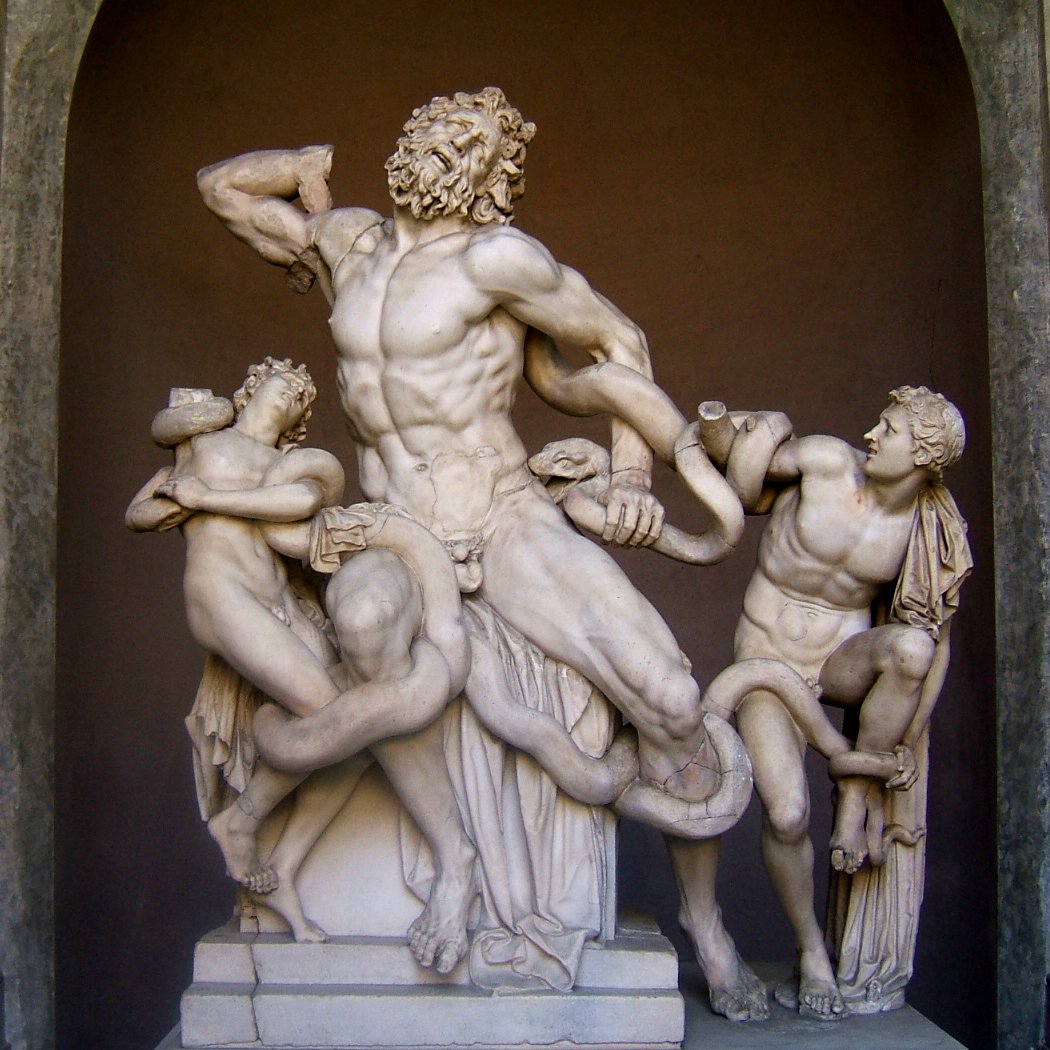
Did the Spartans have a Golds Gym membership?

If you have never done body weight exercises for strength here are some videos that illustrate proper form.
Pushing:
Pulling:


Cool Down 15 min
Run 10 Min (if you have a 1.5 mile run time fitness test where you work run at the pace you need to pass the test.  Example 6mph = 10 minute mile = 15 min 1.5 mile run)
Walk 5 min
Stretch 5- 10 min

Train hard, Train Smart, Be safe


Tuesday, June 14, 2011

Super Soldier Project - Part 2 Benifits of Chiropractic Treatment

If you are reading this you are probably a cop, a soldier, a martial artist, or some combination of the above.  If so you wear a gun belt, armor, or pay to have other people throw - slam - hit -choke -you, and crank your joints.  All of which knocks your joints and back out of alignment.


In simplest terms, a subluxation (a.k.a. Vertebral Subluxation) is when one or more of the bones of your spine (vertebrae) move out of position and create pressure on, or irritate spinal nerves. Spinal nerves are the nerves that come out from between each of the bones in your spine. This pressure or irritation on the nerves then causes those nerves to malfunction and interfere with the signals traveling over those nerves.

How does this affect you?  Your nervous system controls and coordinates all the functions of your body. If you interfere with the signals traveling over nerves, parts of your body will not get the proper nerve messages and will not be able to function at 100% of their innate abilities. In other words, some part of your body will not be working properly.

The purpose of the Super Soldier Project is to increase and prolong peak human performance.  The following articles outline how regular chiropractic treatment can help achieve those goals


Chiropractic Treatment Benefits for Athletes
Published Jul 10, 2009
                                                          
Athletes undertaking rigorous fitness regimes often push their bodies to the limit. Since their performance is based on the health and strength of their body, many need regular massage treatments and physical therapy sessions just to stay in shape and keep performing to their fullest potential.

Some researchers believe chiropractic therapy also offers several benefits for athletes who are constantly pushing their body to the max. Whether they need to recover from injury, improve performance or increase joint flexibility, ongoing chiropractic treatments may be a valuable addition to their training regime.

Why Athletes May Need Chiropractic Therapy
According to a study published in Chiropractic: The Journal of Chiropractic Research and Clinical Investigation by Lauro A and Mouch B in 1991, athletes exhibited a 30% improvement in performance after 12 weeks of chiropractic treatment. They were tested on several aspects of athletic ability including kinesthetic perception, power, reaction time, agility and balance. Those who did not receive chiropractic treatment showed only a 1% increase in performance after 6 weeks of treatment, while those who received the chiropractic treatments showed an 18% increase in performance after 6 weeks.

Many professional athletes also undergo treatments before, during and after a game. According to PracticalChiro.com, athletes including Tiger Woods, Lance Armstrong and Barry Bonds all receive treatments from sports chiropractors so that they can improve their performance and recover properly throughout training and game season. (Source: PracticalChiro.com)

According to SpinalHealth.net, 7% of the San Francisco 49’s football team consulted with a chiropractor shortly after winning the Super Bowl in 1990. Chiropractic treatments after the intense game allowed them to recover easily and restore their health. (Source: SpinalHealth.net)

Young athletes - not only professionals or Olympians – can also benefit from chiropractic treatment because this type of therapy enhances blood flow, improves range of motion and can also increase recovery rates after intensive training or a game. Full range of motion is particularly important for endurance athletes and those who must employ various types of stretches into their training routine.

Key Benefits of Chiropractic Treatments for Athletes
In addition to improving performance, ongoing chiropractic therapy offers several health and wellness benefits. These include:
·         Improved posture
·         Increased range of motion
·         Improved immune system that can ward off common illnesses or disease
·         Better focus and concentration
·         Reduction of migraines or severe headaches
·         Increased blood circulation
·         Better joint flexibility
·         Reduced risk of injury
·         Increased blood and oxygen flow throughout the body
·         Improved recovery rates after a sports injury
·         Reduction of pain in major joints
Many athletes only turn to chiropractors after they have been injured, (hmmm, who does that sound like?) but it may be more beneficial to incorporate chiropractic therapy into the weekly training routine. A sports chiropractor can offer specialized treatments for marathon runners, tennis players, football and basketball players, and other types of athletes who are constantly on the move.

For high-performance athletes, natural methods of stress reduction and toxin removal are necessary for better health overall. Chiropractic treatments may play an important role in the lives of these athletes throughout their training season, and during their most competitive seasons.


Train Hard, Train Smart, Be Safe

Wednesday, June 8, 2011

VIOLENCE ALWAYS HAS A COST

This news story is from

CHASKA, Minn. (WCCO) — A Chaska, Minn., bar is closed temporarily after a man was stabbed to death there overnight.

According to police, 35-year-old Jason David Foster was stabbed in what was called a “disturbance” inside the bar.

Witnesses told WCCO-TV that Foster was standing up for some women who were being accosted while walking away from the bar.

The men accosting the women were told to go outside. Foster was then stabbed several times outside in the bar’s parking lot.

He was taken to the Two Twelve Medical Center in Chaska, where he was pronounced dead.

Three men have been taken into custody and are being held at Carver County Jail. They are 32-year-old Jesse James Rogers, 38-year-old McCarther James McGarry, and 24-year-old Travis James Fritz.
They face potential second-degree homicide charges. Fritz and McGarry also face potential first-degree riot charges.
Kelley’s bar was to remain closed Friday evening. Police said it may stay closed through the weekend.
The bar’s owner, Kelley Sharp, had already been scheduled to meet with police next Tuesday to discuss authorities’ growing concerns with the establishment. The meeting will happen as scheduled, police said

I have no further information beyond the news story.  I have no idea how he found himself in the situation that caused his death.  I am not judging or disrespecting Jason Foster.  My condolences go to his family.

However, readers of this blog can learn from this tragedy and perhaps prevent future tragedies.

Hearing this story reminded me of myself when I was young and dumb.  It also reminded me of a phenomenon I call brown belt syndrome.

Brown belt syndrome is when you know just enough to get killed.  When you say I hope some one tries to mug me so I can teach them a lesson with my skills.  I hope I come across someone being bullied so I can save them.

Every (male) brown belt’s wet dream is to come to the aid of a damsel or damsels in distress.  You see this in nearly every martial art movie ever. 
  • Girl is being harassed,
  • The hero walks over, says something along the lines of, “the lady said to leave her alone”
  • Creep throws punch
  • Hero does some sort of amazing commando ninja martial arts move
  • Creep runs away
  • Hero gets laid

Girls really don’t dig violence.  (If they do look out !!!!).  In fact what most men “think” women think is vastly different than what women think.  Any women reading this feel free to chip in on the comments.

I’m not saying don’t stand up for / help people who need it
I am saying pick your battles and be smart.  Stack the deck in your favor.

Peyton Quinn’s instructions:
•         Do NOT insult him
•         Do NOT threaten him
–        (oh yeah, well I’ll kick your ass!)
•         Do NOT challenge him
–        (what are you going to do? Hit me?)
•         Do NOT deny this is happening
–        (he’s not going to physically assault me for saying that about his mother)
•         Do give him a face saving exit

Can the situation be solved with strategy and words?  Not every situation can be.  If not, do you still need to be involved in the situation?

If you find yourself in a situation where you may need to escalate to a physical confrontation ask yourself:
  • Is this worth fighting for?
  • Is this worth dying for?
  • Is this worth killing for?
  • Is this worth a jail sentence?

If you answer no to any of the above, get out of there. 

This next chunk is paraphrased from Rory’s new book.  So go buy it (I have a blurb on the back)

Violence always has a price.  Even social violence - ritualized combat between males of the same species to establish dominance can result in injury

Ritualized dominance struggles are very seldom injurious. We are programmed to attack this way and designed to take it.  Although it hurts, the goal of this conflict behavior is NOT to injure. This allows us to safely engage in conflict, up to and including physical fights.  Rams butt heads, Bears wrestle, and Deer fence with their antlers.  Humans fist fight and wrestle.

But, when people wrestle on concrete sometimes the get their head smashed and die
Is this worth fighting for?
Is this worth dying for?

A close friend of my brother Kent got in a fight in college.  He fell and smashed his head on a concrete traffic control post.  He spent the next three years of his life learning how to talk and walk again.  He never recovered more mental capacity than a young child.  All over macho tough guy social violence bullshit.

Humans are social creatures and have subconscious rules for social violence.  We are also hunters and capable of killing prey.  We are fairly unique in that we can use the tools and tactics that we developed to hunt prey to kill other humans.  Two bridges between social and asocial violence are territories in dispute, and the status seeking show.  In a marginal society like criminal subculture it is better to be feared than loved.  A reputation for violence is a valuable thing.  So how do you safely earn this reputation?   By beating up your allies?  Not conducive to having guys watch your back.  You could fight rivals.  But those rivals have friends watching their back and it could easily escalate beyond what you are prepared for.  So that leaves an outsider but not an enemy.  Someone by themselves or at least with no large male companions.  A relatively easy mark. 

When social violence starts (dominance struggles) in a territory in dispute (The men accosting the women were told to go outside / give up territory) between someone by themselves or at least with no large male companions and a group of men (An outsider is discouraged from interfering with group business – a way of establishing territory).  That violence has increased potential to escalate to a group monkey dance or a status seeking show. 

A Status Seeking Show will violate almost all the rules of normal social violence.  That is the point.  Look how crazy I am did you see what I just did?  Better not fuck with me. 
A Status Seeking Show doesn’t need to follow the steps of the monkey dance nor limit damage either.  A savage beating, knifing, or killing serves the purpose of seeking status by showing how crazy you are.

So all you brown belts, and or guys that think you can impress women by establishing dominance over another guy, remember violence always has a price.  That guy who goaded you into a fight just might be using you to earn a rep for being a crazy mutha fucka.  Real world violence happens faster, harder, closer, and by surprise.  Avoiding confrontation or deescalating it isn’t weak or pussing out.  It’s a smart strategy.  One much more likely to get you laid, and much less likely to get you stabbed.

Train hard, train smart, be safe

Thursday, June 2, 2011

Super Soldier Project part 1 - Rest and Recovery


As I started the Super Soldier Project my left knee was swollen up like a grape fruit.  I was forced to take some time off to recover.  The lesson being incorporate regularly scheduled recovery times into your training plan, or plan on getting injured and being forced to take unscheduled recovery time.  Either way recovery time will be necessary.

I had some Ideas on how I wanted to incorporate rest and recovery into my training but I always want to learn and improve so I started doing some research.

On one side of the spectrum was advice for and from body builders.  The general advice was to train 4 times a week and do as little as possible the other days of the week.  I’m not a body builder (despite my smokin’ hot bod) I am a crime fighter.  I don’t train to look a certain way.  I train to fight!  In order to be a fighter, besides time in the gym, I need to be in the Dojo, on the road, and on the range.  That is very active, I can’t do as little as possible when I’m not in the gym.

On the other side of the spectrum are mixed martial artists.  They have strength training, cardio training, Jujitsu, Boxing, and Muy Thai all on the same day.  However, that type of intense training can only be maintained for about 6 weeks.  That is peaking for one specific event, not general fitness / preparedness.  That is why these guys only fight once or twice a year.  Trying to train that hard for longer leads to over training.  That is why my knee was swollen up like a grape fruit.

I did find some good information that met my needs for the project.  So instead of me paraphrasing or out right plagiarising what I found I just cut and paste and included the links to the original sources.


The following information is from:

Most athletes know that getting enough rest after exercise is essential to high-level performance, but many still over train and feel guilty when they take a day off. The body repairs and strengthens itself in the time between workouts, and continuous training can actually weaken the strongest athletes.
Rest days are critical to sports performance for a variety of reasons. Some are physiological and some are psychological. Rest is physically necessary so that the muscles can repair, rebuild and strengthen. For recreational athletes, building in rest days can help maintain a better balance between home, work and fitness goals.
In the worst-case scenario, too few rest and recovery days can lead to overtraining syndrome - a difficult condition to recover from.
What Happens During Recovery?
Building recovery time into any training program is important because this is the time that the body adapts to the stress of exercise and the real training effect takes place. Recovery also allows the body to replenish energy stores and repair damaged tissues. Exercise or any other physical work causes changes in the body such as muscle tissue breakdown and the depletion of energy stores (muscle glycogen) as well as fluid loss.
Recovery time allows these stores to be replenished and allows tissue repair to occur. Without sufficient time to repair and replenish, the body will continue to breakdown from intensive exercise. Symptoms of overtraining often occur from a lack of recovery time. Signs of overtraining include a feeling of general malaise, staleness, depression, decreased sports performance and increased risk of injury, among others.
Short and Long-Term Recovery
Keep in mind that there are two categories of recovery. There is immediate (short-term) recovery from a particularly intense training session or event, and there is the long-term recovery that needs to be build into a year-round training schedule. Both are important for optimal sports performance.
Short-term recovery, sometimes called active recovery occurs in the hours immediately after intense exercise. Active recovery refers to engaging in low-intensity exercise after workouts during both the cool-down phase immediately after a hard effort or workout as well as during the days following the workout. Both types of active recovery are linked to performance benefits.
Another major focus of recovery immediately following exercise has to do with replenishing energy stores and fluids lost during exercise and optimizing protein synthesis (the process of increasing the protein content of muscle cells, preventing muscle breakdown and increasing muscle size) by eating the right foods in the post-exercise meal.
This is also the time for soft tissue (muscles, tendons, ligaments) repair and the removal of chemicals that build up as a result of cell activity during exercise.
Long-term recovery techniques refer to those that are built in to a seasonal training program. Most well-designed training schedules will include recovery days and or weeks that are built into an annual training schedule. This is also the reason athletes and coaches change their training program throughout the year, add crosstraining, modify workouts types, and make changes in intensity, time, distance and all the other training variables.
Cross training is a great way to condition different muscle groups, develop a new set of skills, and reduce boredom that creeps in after months of the same exercise routines. Cross training also allows you the ability to vary the stress placed on specific muscles or even your cardiovascular system. After months of the same movements your body becomes extremely efficient performing those movements, and while that is great for competition, it limits the amount of overall fitness you possess and reduces the actual conditioning you get while training; rather than continuing to improve, you simply maintain a certain level of fitness. Cross training is also necessary to reduce the risk of injury from repetitive strain or overuse.
The term cross training refers to a training routine that involves several different forms of exercise. While it is necessary for an athlete to train specifically for their sport if they want to excel, for most exercisers cross training is a beneficial training method for maintaining a high level of overall fitness. For example, you may use both biking and swimming each week to improve your overall aerobic capacity, build overall muscle strength and reduce the chance of an overuse injury. Cross training limits the stress that occurs on a specific muscle group because different activities use muscles in slightly different ways.

Adaptation to Exercise
The Principle of Adaptation states that when we undergo the stress of physical exercise, our body adapts and becomes more efficient. It’s just like learning any new skill; at first it’s difficult, but over time it becomes second-nature. Once you adapt to a given stress, you require additional stress to continue to make progress.
There are limits to how much stress the body can tolerate before it breaks down and risks injury. Doing too much work too quickly will result in injury or muscle damage, but doing too little, too slowly will not result in any improvement. This is why personal trainers set up specific training programs that increase time and intensity at a planned rate and allow rest days throughout the program.
In general, one or two nights of poor or little sleep won't have much impact on performance, but consistently getting inadequate sleep can result in subtle changes in hormone levels, particularly those related to stress, muscle recovery and mood. While no one completely understands the complexities of sleep, some research indicates that sleep deprivation can lead to increased levels of cortisol (a stress hormone), decreased activity of human growth hormone (which is active during tissue repair), and decreased glycogen synthesis.
Other studies link sleep deprivation with decreased aerobic endurance and increased ratings of perceived exertion.
Balance Exercise with Rest and Recovery.
It is this alternation of adaptation and recovery that takes the athlete to a higher level of fitness. High-level athletes need to realize that the greater the training intensity and effort, the greater the need for planned recovery. Monitoring your workouts with a training log, and paying attention to how your body feels and how motivated you are is extremely helpful in determining your recovery needs and modifying your training program accordingly.


Good information on rest.  My research on recovery lead me to

Rest and recovery is an essential part of any workout routine. Your after exercise recovery routine has a big impact on your fitness gains and sports performance and allows you to train much more effectively. Unfortunately, most people don't have an after exercise recovery plan. Here are some tips to get your post-workout plans on track.
Recovery after exercise is essential to muscle and tissue repair and strength building. This is even more critical after a heavy weight training session. A muscle needs anywhere from 24 to 48 hours to repair and rebuild, and working it again too soon simply leads to tissue breakdown instead of building. For weight training routines, never work the same muscles groups two days in a row.
10 Ways To Recover Quickly After Exercise
There are as many methods of recovery as there are athletes. The following are some of the most commonly recommended by the experts.
1.               Cool Down. Cooling down simply means slowing down (not stopping completely) after exercise. Continuing to move around at a very low intensity for 5 to 10 minutes after a workout helps remove lactic acid from your muscles and may reduce muscles stiffness. warming up and cooling down are more helpful in cooler temperatures or when you have another exercise session or an event later the same day.
2.               Replace Fluids. You lose a lot of fluid during exercise and ideally, you should be replacing it during exercise, but filling up after exercise is an easy way to boost your recovery. Water supports every metabolic function and nutrient transfer in the body and having plenty of water will improve every bodily function. Adequate fluid replacement is even more important for endurance athletes who lose large amounts of water during hours of sweating.
3.               Eat Properly. After depleting your energy stores with exercise, you need to refuel if you expect your body to recover, repair tissues, get stronger and be ready for the next challenge. This is even more important if you are performing endurance exercise day after day or trying to build muscle. Ideally, you should try to eat within 60 minutes of the end of your workout and make sure you include some high-quality protein and complex carbohydrate.
4.               Stretch. After a tough workout, consider gentle stretching. This is a simple and fast way to help your muscles recover.
5.               Rest. Time is one of the best ways to recover (or heal) from just about any illness or injury and this also works after a hard workout. Your body has an amazing capacity to take care of itself if you allow it some time. Resting and waiting after a hard workout allows the repair and recovery process to happen at a natural pace. It's not the only thing you can or should do to promote recovery, but sometimes doing nothing is the easiest thing to do.
6.               Perform Active Recovery. Easy, gentle movement improves circulation which helps promote nutrient and waste product transport throughout the body. In theory, this helps the muscles repair and refuel faster.
7.               Have a Massage. Massage feels good and improves circulation while allowing you to fully relax. You can also try self-massage and Foam Roller Exercises for Easing Tight Muscles and avoid the heavy sports massage price tag.
8.               Take an Ice Bath. Some athletes swear by ice baths, ice massage or contrast water therapy (alternating hot and cold showers) to recover faster, reduce muscle soreness and prevent injury. The theory behind this method is that by repeatedly constricting and dilating blood vessels helps remove (or flush out) waste products in the tissues. Limited research has found some benefits of contrast water therapy at reducing delayed onset muscle soreness (DOMS).
How to use contrast water therapy: While taking your post-exercise shower, alternate 2 minutes of hot water with 30 seconds of cold water. Repeat four times with a minute of moderate temperatures between each hot-cold spray. If you happen to have a spa with hot and cold tubs available, you can take a plunge in each for the same time.
9.               Get Lots of Sleep. While you sleep, amazing things are taking place in your body. Optimal sleep is essential for anyone who exercises regularly. During sleep, your body produces Growth Hormone (GH) which is largely responsible for tissue growth and repair.
10.           Avoid Overtraining. One simple way to recovery faster is by designing a smart workout routine in the first place. Excessive exercise, heavy training at every session or a lack of rest days will limit your fitness gains from exercise and undermine your recovery efforts.
Listen to Your Body for a Faster Recovery
The most important thing you can do to recovery quickly is to listen to your body. If you are feeling tired, sore or notice decreased performance you may need more recovery time or a break from training altogether. If you are feeling strong the day after a hard workout, you don't have to force yourself to go slow. If you pay attention, in most cases, your body will let you know what it needs, when it needs it. The problem for many of us is that we don't listen to those warnings or we dismiss them with our own self talk ("I can't be tired, I didn't run my best yesterday" or "No one else needs two rest days after that workout; they'll think I'm a wimp if I go slow today.").


I think that is some good general information that we should all incorporate into our training.

Basic guidelines I follow for the Super Soldier Project
Long term recovery
1 rest week for every 8 weeks of training

Short term recovery
1 rest day for every 6 days of training

Active recovery
10-15 minute cool down
Contrast water therapy shower post work out

Train hard, TRAIN SMART, be safe

Wednesday, June 1, 2011

Taiho Jitsu – Street dependable, court defendable


Hey everybody,
It’s been awhile since your friendly neighborhood Samurai Super Cop has put his thoughts to page.  I have been getting my ass handed to me by Steve Jimerfield for the last week at One on One Control Tactics Instructor School.  Well I’m back, and I’m excited to share some of the things I learned, and other things I knew that were reinforced.


Previously on Budo Blog…..I was crying that I’m old and my knee hurt.  I don’t like crybabies so I started the “Super Soldier Project”.  Good news, it’s working!  My knee felt great for the entire class and continues to get better.  More specifics and how to create your own super soldier project to follow (both here and on Lise’s blog).


I bring up the project because at pushing 37 I was complaining about getting old.  Steve Jimerfield Sensei is 30 years older than me.  He has an artificial knee in one leg, and partial paralysis in the other.  He doesn’t complain about getting old he just kicks ass.  During the “old man” warm up (never more than 10 of anything) he always outlasted fit young defensive tactics instructors from across the state. 

He told me he really didn’t even get into shape until he was 50.  If he can do it, I can do it.  We all can do it.

I have had the pleasure of training with some of the greatest instructors in the world.  Being the ever competitive alpha male I am, I always think about how / if I could take em’.   I always felt I could hold my own with them.  Meaning in a thunder dome two men enter one man leaves type of thing both of us would end up in the hospital or the morgue or some combo thereof.  Maybe that is arrogance, maybe that is overconfidence, but I truly felt I would do alright.  When rolling with Jimerfield, I felt like he could break me in half, and if he really wanted to there wasn’t much I could do to stop him.  That is equal parts scary and exciting and ties back into the ‘Super Soldier Project”.  Because if he can do it, I can do it – I want 67 year old Kasey to be able to crush 37 year old Kasey with ease.  I will have an advantage Jimerfield never did, being taught by Jimerfield (and MacYoung, and Miller). 

To make yet another comic book reference, Dick Grayson (Robin, Nightwing, and now Batman) has the potential to surpass Bruce Wayne (Batman) because he was trained by Batman.  Like Bruce Wayne, Jimerfield trained in many martial arts and defensive tactics systems.  He field tested them on the streets.  Refining what worked discarding the rest.  That is a long, arduous, and dangerous process, one that very few Instructors have gone through themselves.  That process becomes streamlined when you teach that to the next generation.  Starting with what works on the street and making further revisions to fit the individual as opposed to reinventing the wheel.  Allowing them to become better faster and eventually surpassing the teacher.  The price being that you pass that information on to someone who will eventually surpass you.


I have been going through that process myself.  I have discovered many similar conclusions along the way.  There are many paths to the top, but the view from the peak is the same. 

For me that path has become Taiho Jitsu
Tai: Body - Ho: Law or Control - Jutsu: Technique. Simply defined, Taiho Jutsu means control and restraining techniques.  Taiho Jitsu is built from the ground up to be used by operators to control violent people.  Taiho Jitsu derives primarily from Aikido, Judo, and Karate (with some kung fu, and western wrestling and boxing as well).  Every technique in the system has been tested over 30 years on the street to work for the officer under pressure against a resisting subject, to be non obtrusive to the public, and defendable in court

Taiho Jitsu – Street dependable, Court defendable.


I’m not much of a “joiner”.  When I left my martial arts organization, it was like a weight was lifted from my chest.  I had the freedom to teach what I knew worked, not what was on a syllabus form Tokyo.  I became an independent Dojo because I got sick of jumping through hoops for people in a far off land who have never been in a fight, much less had to control a doped up asshole who didn’t feel pain.  All that organization did for me was collect dues and testing fees from me. 

So you can see I wasn’t looking for an Organization.  But as the old saying goes when the student is ready the teacher will appear.  I came across an organization founded by a man I respect.  Run by operators for operators.  That organization is – Taiho Jutsu Clubs International.

I am pleased to announce that the Keishoukan Dojo is the Honbu Dojo for Taiho Jitsu Minnesota.


Taiho Jitsu / One-on-One Control Tactics (O3CT) Can, but is not meant to replace your current training or defensive tactics system.  O3CT is designed to enhance and supplement your program. Increasing competence and confidence in hand to hand confrontations both standing and on the ground.

So, you maybe asking yourself why haven’t I heard of this???
Jimerfield Sensei relies entirely on word of mouth.  He doesn’t advertise, or make DVD’s.  He doesn’t sell force on force training gear or offer weekend seminars for $1000s of dollars (although he could).  Jimerfield Sensei is dedicated to saving lives.  With just word of mouth he teaches nearly 30 weeks a year all across the world. 

With budget cuts and scheduling conflicts the Instructor course that I had set up for 20 officers got reduced to 6 (with only 1 paying student).  I felt horrible because Jimerfield came to Minnesota at my request and it cost him out of pocket to do so. 

Jimerfield said to me, Kasey if it means saving a life I would come out for one person. I’ll be fine that is why we have the Organization set up the way we do.  In one week Jimerfield Sensei did more for me than other Organizations had in nearly 20 years of martial arts training.

So I am using this blog to help spread the word.  Any law enforcement / corrections officers reading this please contact me or jimerfield.org about setting up an Instructor’s course for your department.  Any civilian martial artist, regardless of style please contact me or taihojitsuclubs.com to set up a seminar.  And those of you in the Washington State area check into training with Jimerfield Sensei when he is home. 

(Rory Miller and Steve Jimerfield live in the same town if the gods of war smile upon me I will have them running a Dojo together J )


Train hard, Train smart, Be safe